
Take a look at the range of telephone and fax products from Amstrad over the years.

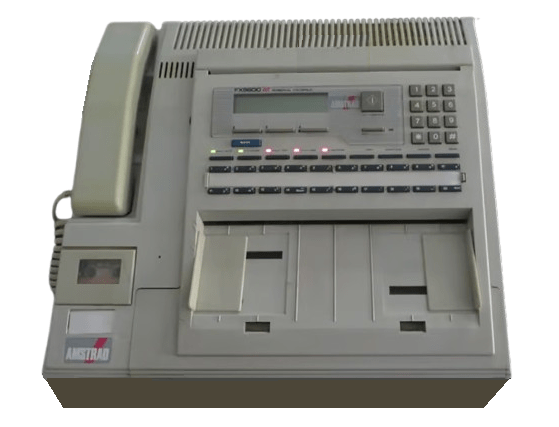
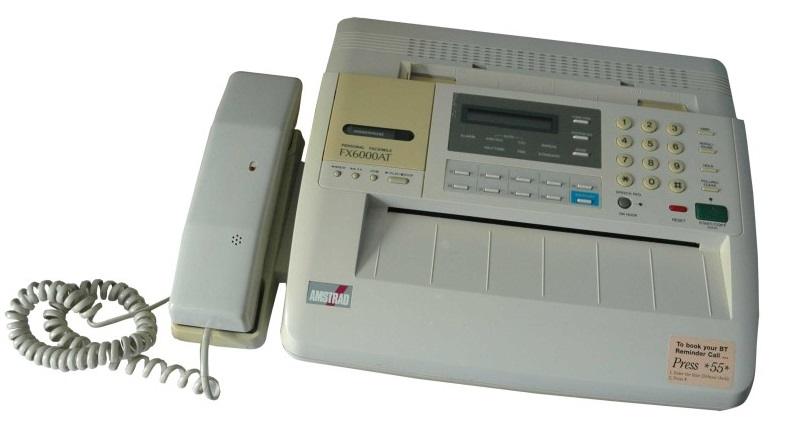

Fax Machine (c.1992).
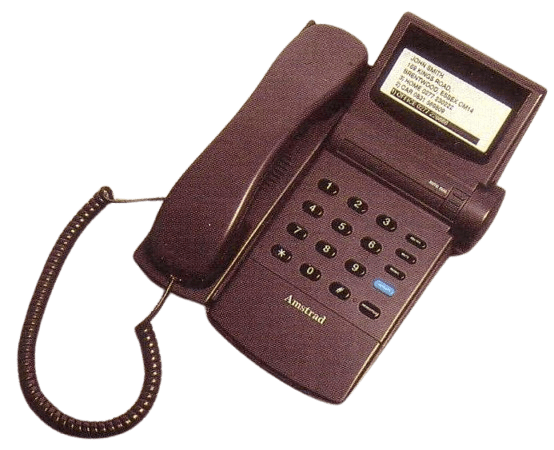
Index Phone (c.1992). Having used a Rolodex (a rotating index card file for storing contacts) on his office desk for many years, Alan Sugar came up with the idea of combining a rotating index with a telephone. The user would turn the large knob at the right-hand side of the machine until the desired contact was displayed on the LCD screen, then press the AUTO DIAL button and voila, the contact would automatically be dialled. The unit also featured a handsfree speakerphone and built-in clock. Data entry for contacts was via a small keyboard under the front flap.


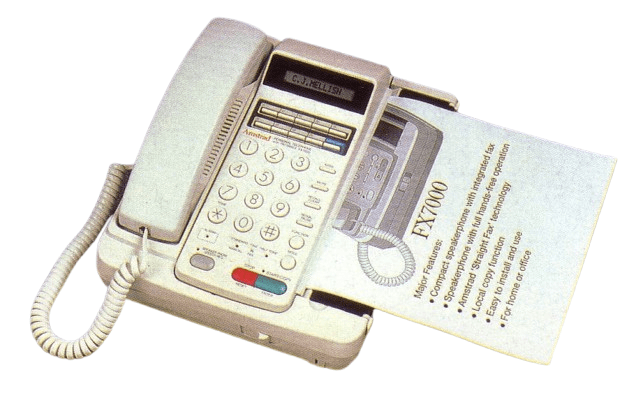

Fax Machine (c.1994). Also features answerphone, 30-number memory and 5-sheet paper feeder. Supplied with a remote control message-retriever keypad. The machine was so versatile it was nicknamed Personal Secretary - hence the PS model number (in contrast with all other Amstrad FX fax machines).
Brochure and specification here.


Cordless Telephone plus Answerphone (c.1994). The CT4000AT version had a corded base unit plus Answerphone and handsfree speakerphone, plus a cordless extension phone.


GSM Mobile Phone (c.1996).

Mobile Flip-Phone (c.1997).

Mobile Phone (c.1998).

PhoneBook (c.1998). Alan Sugar developed the idea he introduced with the IX1000 Index Phone, but instead of 'rolling' through the entries, the user could start typing the address-book name on a QWERTY keypad and press one button to dial it when displayed. An added bonus was the PDi2000 Pocket Dock-it supplied with the product. This looked like a small organiser which docked into the main unit and saved all the PhoneBook entries. There were two products in the range; the PB1500 having greater capacity (500 addresses) and a dark grey finish.


Email phone (2000). As the new millennium dawned, it was clear that the age of the fax machine was all but over, and that email was the way forward. At the time, however, the only means by which email messages could be sent and received was via computer. Amstrad's solution? The emailer, a stand-alone device which (as well as being a multi-function phone with Voicemail, handsfree operation and 700-entry address book) allowed the user to send and receive email messages using its pull-out keyboard and built-in LCD screen monitor. Yet that description doesn’t do the product justice! There were so many additional features packed into the emailer: it could send text messages to mobile phones and faxes to fax machines; it could even send electronic greeting cards. Its address book entries could be stored, edited and re-loaded via the PDi2000 Pocket Dock-it provided.


Email phone (2002). The follow up to the original emailer. In addition to its sleek silver restyling, a number of electronic enhancements were made, most notably internet access and the ability to play Sinclair Spectrum games. Personalised ringtones could also be downloaded. The product was supplied with a PDi2000 Pocket Dock-it, a plug-in electronic address book/organiser to have and update your contact information on the move.


Email phone with videophone (2004). Alan Sugar made the stuff of sci-fi dreams a reality – a commercially available, affordable videophone. Amstrad's third-generation emailer, the E3 was packed with even more features than its predecessors. It incorporated a colour LCD, an improved internet browser and the ability to download and play polyphonic ringtones - a world first for a corded landline telephone. A GamePad was also supplied as well as the PDi2000 Pocket Dock-it, to have and update your contact information on the move. The product's TV ad – from over 20 years ago – would certainly not be deemed appropriate these days!


